
Discover Darvel

Heritage story · Hastings Square

The strange case of Darvel’s Dagon Stone.

A controversial archaeologist, an ancient god, H. P. Lovecraft—and the surprisingly ordinary truth beneath the mystery.

Begin the story
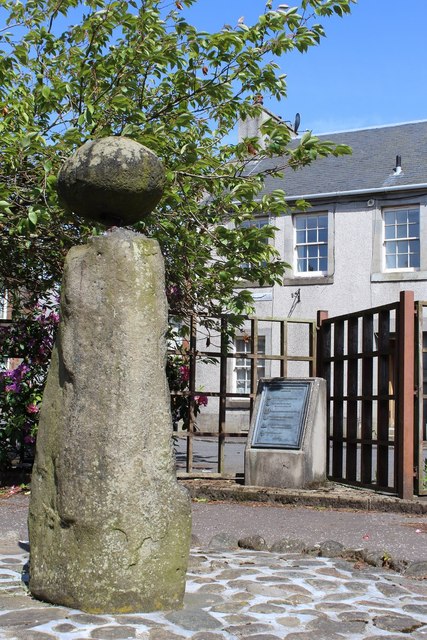
The weathered Dagon Stone in Hastings Square, Darvel
Hastings Square · Photograph supplied by Steve Gillies
01

Darvel’s Dagon Stone has the appearance of a monument with something to hide. With a rough stone body and a round boulder fixed to its summit, it resembles a primitive human figure: a body, a head and no face.

Its age is uncertain, its original purpose is unknown and even its unusual name invites speculation.

Archaeologists, historians and writers have carried it from prehistoric Scotland to the temples of an ancient god—and even into the strange fictional world of H. P. Lovecraft.
02

The controversial archaeologist

The man who saw
hidden meanings.

One of the first people to give the Dagon Stone a prehistoric pedigree was Ludovic McLellan Mann. An accountant and insurance broker by profession, Mann became an energetic amateur archaeologist.

He collected ancient objects, investigated discoveries and promoted Scotland’s past through exhibitions, newspapers and radio. He was also controversial.

Mann believed prehistoric people possessed advanced knowledge of astronomy, geometry and measurement. Where others saw unrelated markings, he sometimes found evidence of an elaborate forgotten civilisation.

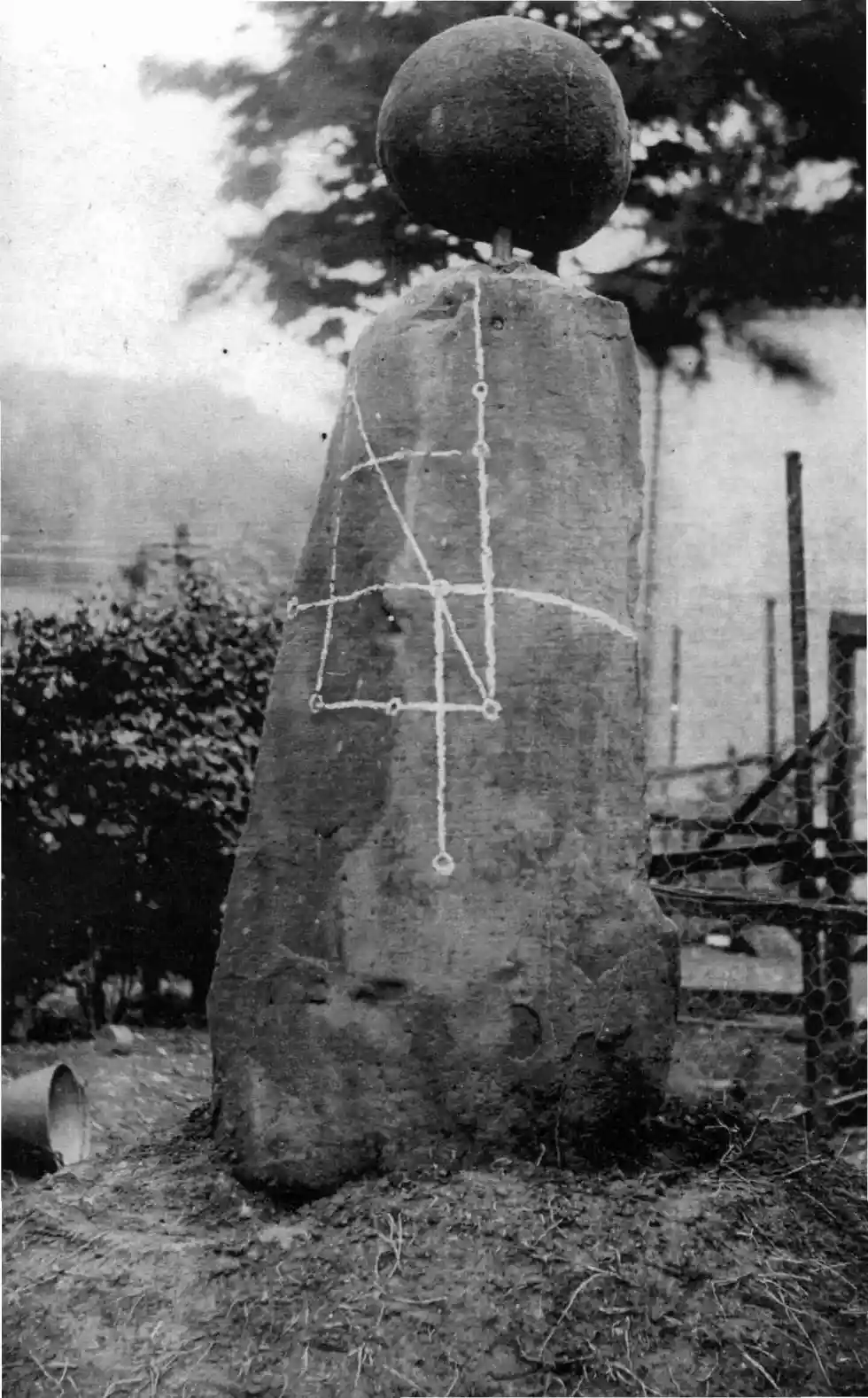
The Dagon Stone in 1922 with chalk lines identifying supposed prehistoric markings
The Dagon Stone in 1922, with chalk lines identifying features Mann believed were prehistoric. George Applebey / Glasgow Herald.
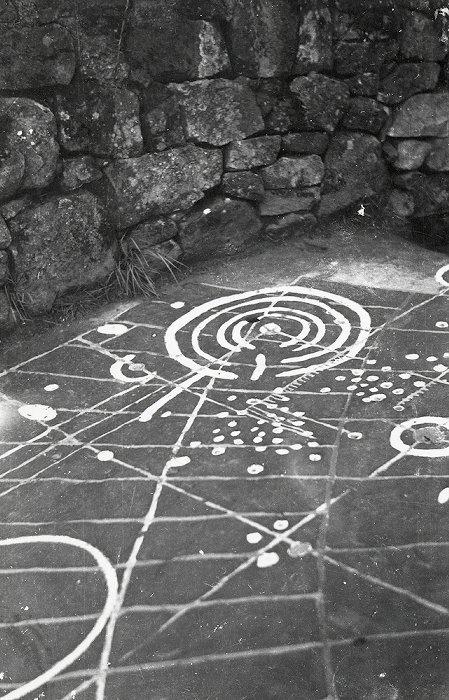
The Cochno Stone in 1937 with its carvings and Mann’s added grid painted white
George Applebey Collection / Historic Environment Scotland, Canmore SC1531807. Image via Dig It!
03

Clydebank · 1937

The lesson of the Cochno Stone.

Mann painted lines, grids and symbols across the celebrated cup-and-ring carvings at Cochno. He hoped to reveal prehistoric measurements and astronomical knowledge.

The photographs remain extraordinary; his treatment and conclusions would not be accepted by archaeologists today.

At Darvel he claimed to find twelve cup marks. A 1922 newspaper photograph showed chalk circles and lines identifying them. Later investigators concluded that they were natural weathering.

04

John Woodburn looks closer

“A big chunk of
common stone.”

John Woodburn was unconvinced by the archaeological drama. In A History of Darvel, he dismissed the suggestion that Dagon carried “hieroglyphic markings” or had been used for sun worship.

Close inspection showed only weather marks, he wrote, while similar stones stood throughout the countryside as gateposts. More tellingly, Darvel’s early chroniclers did not mention it.

“Dagon can claim to be the oldest ‘Major Road Ahead’ sign in all Scotland.”

John Woodburn, A History of Darvel

Woodburn knew that the old Edinburgh road had run north of the later highway. When a new road was made in 1752, he suggested, workers encountered a large stone they lacked the equipment to carry away. Their practical solution was to stand it upright at the top of Ranoldcoup Road.

When the road was widened, Dagon became an obstruction. In 1873 Darvel’s commissioners proposed breaking it into road metal. It survived because San Mair offered to use it as a rubbing stone for his cattle. Martha Brown of Lanfine later gave it “asylum” in the Institute grounds.

Black and white illustrated portrait of H. P. Lovecraft
H. P. Lovecraft portrait by Tranberry · CC0
05

A literary coincidence

Dagon rises
from the sea.

Dagon was a deity of the ancient Near East. In 1919 the American writer H. P. Lovecraft borrowed the name for a tale about a sailor, a monolith raised from the ocean floor and an immense marine creature.

The resemblance is irresistible: Darvel has a mysterious monolith, a controversial archaeologist claimed to see ancient symbols upon it, and both share Dagon’s name.

But there is no evidence that Lovecraft had any connection with Darvel. The link belongs to coincidence—and to imagination.

06

A travelling monument

Four places
in one town.

  1. 1752?

    Woodburn suggests road builders raised the stone at Ranoldcoup Road.

  2. 1894

    Moved to the grounds of Brown’s Institute.

  3. 1938

    Flitted to the green beside Burn Road.

  4. 1961–62

    Re-erected in Hastings Square, where it stands today.

07

The ordinary truth

Where did Dagon
get his head?

The round stone was once stolen and thrown into a deep pool east of Ranoldcoup Road. Darvel townsmen recovered it, and William Morton, son of the local blacksmith, secured it to Dagon’s shoulders with an iron dowel dated 1821.

Dagon’s head did not come from an ancient temple. It did not rise from Lovecraft’s ocean floor.

It was dug out of the Darvel earth in 1821, when local men were making the curling ponds.

Sources: John Woodburn, A History of Darvel (1967); J. N. G. Ritchie, “Ludovic McLellan Mann (1869–1955): ‘the eminent archaeologist’”; Historic Environment Scotland’s Dagon Stone record; and Kenny Brophy’s “Dagon Day”.

Editorial note: Woodburn’s 1752 account is a reasoned local interpretation, not a proven origin. The Dagon Stone remains recorded archaeologically as a possible prehistoric standing stone.